Tuesday, June 11, 2013

10. Remembering Mrs. Hurst: Hamilton Twp's First Woman Safety Officer


     Elizabeth E. Cooper brought these terrific articles about her mother, Mrs. Mary Jane Hurst, to the Hamilton One Stop History Share event in May. Mrs. Hurst was Hamilton Township’s first female school safety officer, sworn in as a “Special Police Officer” in January, 1953 – one of the earliest women in the nation to have this position. This was big news in the region; newspapers and civic groups continued to follow Mrs. Hurst in her new career - as the great coverage in the article below (written two years after she was first appointed) shows. This was not Mrs. Hurst’s first ground-breaking role. For some time she also worked at the General Motors plant in Ewing as a "Rosie the Riveter," building airplanes during World War II.
 

          Hervey S. Moore, Jr., the Police Commissioner who appointed Mrs. Furst, is another interesting figure in Mercer history. Shortly after graduating law school 1941, he joined the Army. His service during World War II won him three bronze stars, the Asiatic-Pacific Theater Campaign Medal, and the American Campaign Medal. He left active duty in 1946, but accepted a commission in the New Jersey National Guard. 

Hervey Studdiford Moore, Jr. as an enlisted man
 
           Moore, Jr., was mayor of Hamilton Township during 1954 and 1955, and the township’s police commissioner from 1952 to 1955. In 1955 he joined the Princeton law firm of Mason, Griffin & Moore as a partner just weeks after its founding. He headed the state's Selective Service during most of the Viet Name War years (1963 – 1973) before being named to the Mercer County Court bench in 1973 by NJ Gov. William T. Cahill. In 1980, Gov. Brendan T. Byrne named him to the state Superior Court where he served until his retirement at aged 70. Judge Moore was referred to by some attorneys at the time as "the father of civil law in Mercer," who insisted on professionalism, courtesy and civility in his courtroom.
 
 
     His father, Hervey S. Moore, Sr., was also an attorney. Moore, Sr. served in the NJ Assembly and founded the Trenton Lions Club in 1921. In 1916, he reportedly “…caused a sensation, both in society and in political circles…” by accusing his former partner in a real estate business of conspiring to kill him. [NYTimes, 10/12/1915,pg.20]


Monday, June 10, 2013

9. Making & Exploring History in Trenton


                 This coming weekend is a big one in Trenton: Art All Night, the 24 hour long extravaganza of arts in all forms, is making its own history, celebrating its 7th year of offering art-for-everyone this Saturday and Sunday, June 15-16. The day, a labor of love for ARTWORKS and a small army of passionate volunteers, takes place in the historic Roebling Wire Works factory building (above) and the adjacent Mill Yard Park.


                 Visitors to Trenton on Saturday, June 15, can make it a full day. The Cadwalader Heights Historic House and Garden Tour goes from noon until 5, and showcases some of the most beautiful and historic homes in that section of the city. This year 11 historic houses and several gardens will be featured in the tour (along with art displays and delicious deserts!) Among the houses open to the public will be 9 Belmont Circle (above) - the first home built in the Cadwalader Heights neighborhood by Frank Forrest Frederick, the director of New Jersey's School of Industrial Arts. 

Friday, June 7, 2013

8. Judge Robbins' History of Windsor


If you've passed through the charming village of Windsor, in Robbinsville Township, you'll note that not much has changed since Judge R.C. (Randall C.) Robbins wrote his 1901 "History of Windsor, N.J. and theMethodist Episcopal Church of Windsor, N.J." Allison Delarue, Princeton Class of '28, donated the pamphlet to the Firestone Library at Princeton University where he may have studied with Judge Robbins' grandson, Edmund Yard Robbins (b. 1867, Windsor, NJ.)

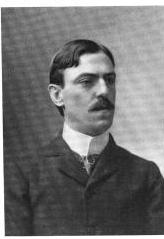
Edmund Yard Robbins
Alison Delarue, Princeton Class of '28, donated this pamphlet to Princeton's Firestone Library. Mr. Delarue may very well have studied under Edmund Robbins during his time at Princeton. Edmund had graduated from Princeton's class of 1889. Several years later he returned to the University after several years abroad studying "comparative philology" and Indo-Iranian linquistics in Germany. He was Princeton University's Ewing Professor of Greek Language and Literature until his retirement in the late 1930s.


Windsor's Methodist Church is still active today. Judge Robbins tells us that improvements to the Church in 1863 left the congregation seriously in debt until 1891 when the Ladies Aid Society proposed a Quilt-Making idea that raised enough money to pay off "all claims standing against the Church and parsonage"! (History of Windsor and...pg. 11)


Wednesday, June 5, 2013

7. CDV Cards and Early Photos


Carte de visite or CDV cards were a new form of calling card that featured tiny (about 2 ¼ “ x 3 ½ “) photographs of a person mounted on a slightly larger card. First popularized by photographer Louis Dodero of Marseilles, France in the early 1850s, the cards became enormously popular in Mercer County and throughout the United States during the Civil War.
 
This card by Hightstown photographer Richard R. Priest, features Civil War sailor Charles Mount. It’s featured in Richard Burton’s terrific Flicker set of CDVs featuring Trenton, Hightstown and other local residents in the later 1800s.

Richard did some terrific research on Chas. (Charles) Mount, and reports that the "Record of Officers and Men of New Jersey in the Civil War", 1876, by William Stryker, has Charles W. Mount mustering in on August 11, 1864 and mustering out on May 11, 1865. He also determined that the ship name printed on Mount’s sailor’s hat is probably the USS Canandaigua.

The sailor pictured is probably Charles W. Mount, youngest son of Ezekiel and Anne (Wright) Mount. Charles and his wife, Anna Williamson, raised their 5 children in Hightstown, NJ. He was hired as postmaster for the ETRA post office when it was created in 1890. [ETRA, a village in East Windsor that sprang up around Cosman’s mill. Originally called Scrabbletown or Milford, with the arrival of the post office, the town changed its name to ETRA – the initials of its most prominent resident at the time: Edward Taylor Riggs Applegate. For more about this village, see Kathleen M. Middleton’s excellent publication East WindsorLandmarks available online.]


6. The Gift of “Amateur” Historians - and Strawberry Hill


Image courtesy of Tom Glover
Admit it: there’s an astonishing army of curious, creative, investigative, and above all, generous history lovers out there who are researching, curating, and sharing a wealth of information out there. Mercer175 will be sharing the discoveries and research of many of those “amateur” (in the TRUE sense of the word: amateur = “lover of”) regional historians as the year goes on.

One of the best known in this area has to be Tom Glover, well-known columnist, Hamilton township (and environs!) historian, prolific blogger and a member of the Mercer175. Tom has thousands of regular fans who faithfully check out his Hamilton Scrapbook blog where he posts historic photos, old newspaper articles, ads and other fascinating tidbits related to Mercer County history – including this great map of “Strawberry Hill” – the Kuser family estate on top of Baldpate Mountain in Hopewell Township. Although the map isn’t dated, it has a lot of fascinating “clues” – including the location of Charles Lindbergh’s home. The Lindberghs escaped to England by 1936 following the kidnapping and death of their oldest child, and the sensational trial that followed. But that’s for another post!

For more information about “Strawberry Hill”, you can start with the articles in The Furrow (the newsletter by the Friends of Howell Living History Farm), and the Baldpate Mountain page on the new Mercer County Parks Commission website.  There’s also an interesting “outsider’s” write up on the park and the surrounding area on the NJ Skylands website.


Wednesday, May 29, 2013

5. Great Community "Finds"

      
Chase XCG-18A US Air Force glider at Mercer County Airport during WW II, 1947. courtesy of J. Turek
      Throughout the 175th anniversary year, the County will be sponsoring community "History Share" events where you're invited to bring in your own historic photographs, articles, programs, and other memorabilia about life in Mercer County. Items are scanned in, documented, and shared with the rest of the Mercer County community.

Testing a Switlik parachute during jump over Mercer County airport in 1936.  courtesy of R.L.Pidcock

      Folks at the first three events (in Trenton at the County's McDade Building, at the Lawrence Library and at the county's One-Stop office in Hamilton Twp.) brought in some great photographs and articles. You can see them by clicking on the "Photo Gallery" link on the Mercer 175 main page. In honor of Memorial Day, we're sharing some terrific photos and articles brought in by John Turek and Robert Lee Pidcock that show Mercer people and scenes during WW II and the Korean Conflict.
 
Trenton resident, Sgt. Michael Karaffa, a six-time decorated veteran flyer with the 394th Bomb Group during WW II
recalled to active duty during the Korean Conflict.  courtesy of J. Turek


Wednesday, May 22, 2013

4. Celebrating Petty's Run

Petty's Run by Martin Griff, The Times of Trenton
     It's not often past meets present so perfectly, but the grand opening of the Petty's Run archeological site between the NJ State House and the Old Barracks in Trenton last week was just such an exciting juncture for the city, county, and state - and history lovers worldwide. A couple of years ago the site, named for the Petty's Run Creek that rushed through the area to the Delaware River, was listed by Preservation NJ as one of the state's most endangered sites. Today it is preserved as an interpretive outdoor classroom for students of all ages interested in early colonial America, thanks to collaboration between the State and Mercer County - and to the passionate citizens who tirelessly advocated on behalf of the project. 

     The history of the site first as a source of fresh water and fish for native Americans and then as host to early paper, cotton and steel mills is explained on six interpretive signs ringing the 18 foot deep display. Hunter Research, Inc., was instrumental in advocating for and researching the site, and they maintained an excellent web journal that provides rich details about the site and the process of excavating, researching and preserving it. 

     For some fine coverage on the Petty's Run opening, check out this feature by Jenna Pizzi and Martin Griff of The Times.